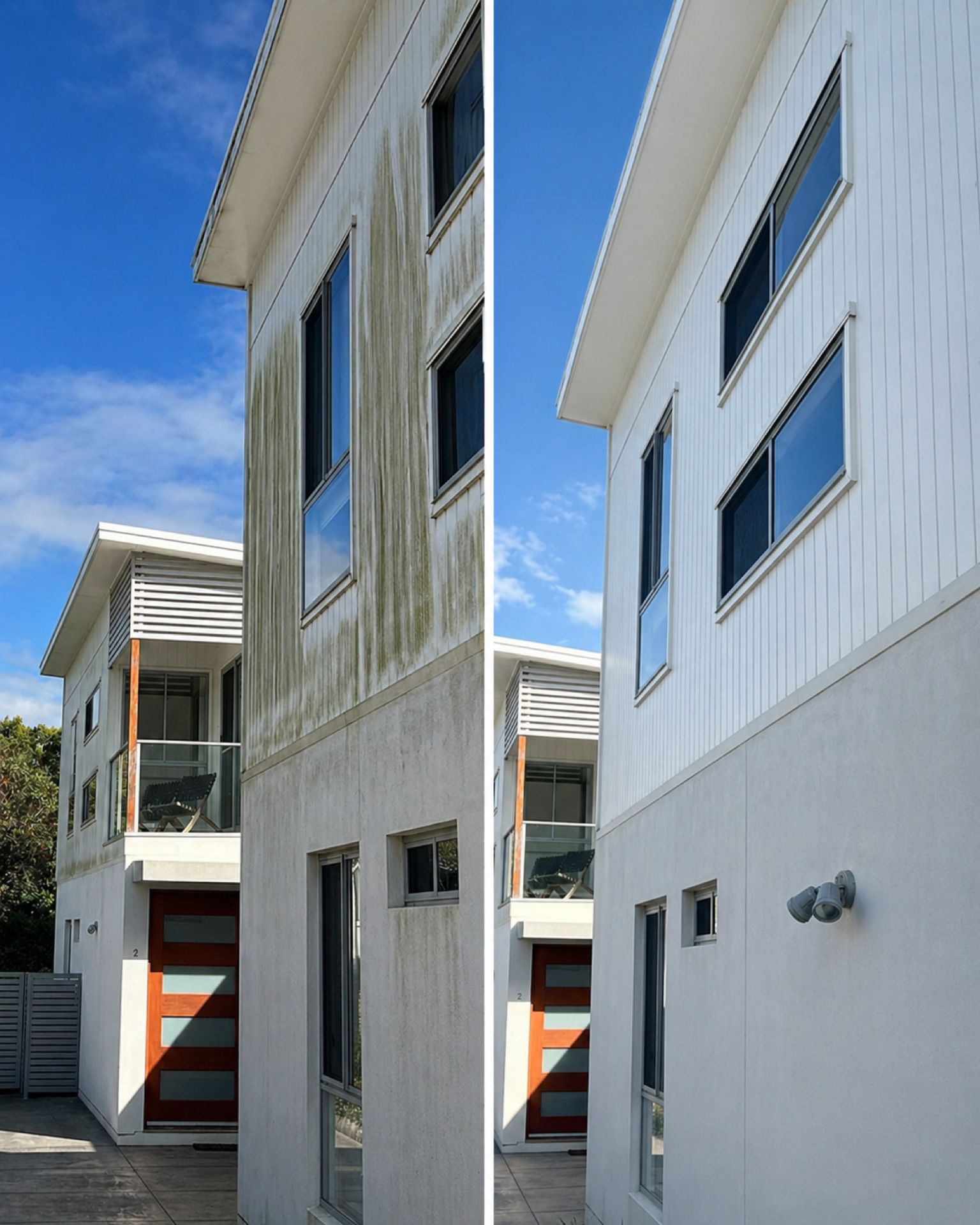
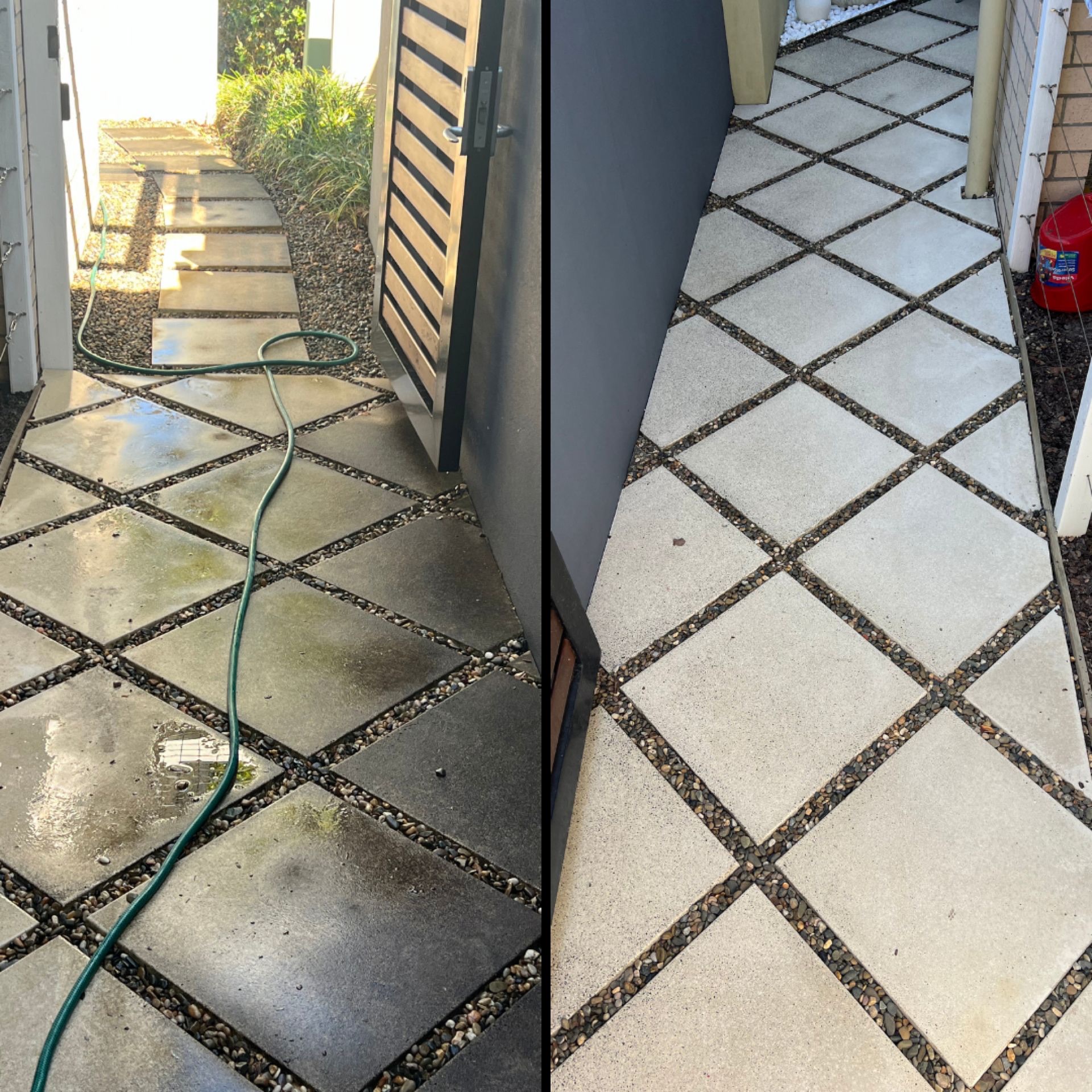
Rust Stain Removal Services in South East Queensland
What Is Rust Stain Removal?
Rust staining on exterior surfaces is one of the most common and most misunderstood property issues in South East Queensland. The orange-brown discolouration you see is iron oxide — rust that has been transferred from a metal source onto a porous surface like concrete, render, pavers, or tile. Once it's there, ordinary cleaning won't remove it, because the iron has chemically bonded to the surface material itself. Pressure washing, scrubbing, bleach, and household cleaners simply don't work.
We use specialist oxalic acid treatment — the chemistry that actually neutralises iron oxide and breaks the bond between the rust and the surface. Applied at the right concentration, with proper dwell time and surface-matched technique, it lifts the staining out of the substrate and rinses away. On some surfaces, phosphoric acid is used as an alternative where oxalic isn't suitable. Either way, the right chemistry is what makes the difference between a treatment that works and one that wastes time.
What Causes Rust Staining?
Rust staining doesn't appear out of nowhere — there's always a source. Identifying that source matters, because if it isn't fixed, the staining will return after treatment. The most common causes in South East Queensland are:
- Bore water and tank water — Iron-rich groundwater is the single biggest cause of rust staining in Queensland. When sprinklers, taps, or overflow paths spray iron-rich water onto concrete, render, or pavers, the water evaporates and leaves the iron behind. Over months and years, this builds into deep, set-in staining.
- Corroding metal fixtures and furniture — Old garden furniture, BBQs, pot holders, balustrade fittings, fence brackets, and gate hardware shed rust onto the surface below every time it rains.
- Steel reinforcement in concrete — Older concrete slabs, especially around pool surrounds and driveways, can develop rust spotting from the steel reinforcing bars (rebar) inside corroding and bleeding to the surface.
- Iron-rich soil contact — Garden beds with iron-rich soil sitting against rendered walls or concrete edges can transfer staining over time, especially after heavy rain.
- Fertilisers and lawn treatments — Some fertilisers contain iron compounds that stain hard surfaces if oversprayed or tracked from lawn to path.
What Happens If You Leave Rust Staining Untreated?
Rust staining doesn't fade or wear off — it gets worse. The longer it's left untreated, the deeper it penetrates the surface, and the harder it becomes to lift. We regularly see properties where staining that could have been mostly removed two years ago is now permanently set into the substrate.
- Deeper penetration — Iron oxide continues to leach into the porous surface, embedding itself further with every wet/dry cycle. Six-month-old staining responds well to treatment; ten-year-old staining often doesn't.
- Spreading staining — If the source isn't dealt with (bore water, corroding fittings), the affected area continues to grow, often turning a small spot into a large patch over time.
- Permanent etching — In severe cases, the iron compounds can chemically alter the surface itself, creating discolouration that no chemical treatment will lift — only resurfacing or replacement.
- Reduced property value and curb appeal — Heavy rust staining on driveways, paths, and pool surrounds is one of the most visible signs of property neglect, and a known issue flagged in pre-purchase inspections.
- Compounding cost — A treatment that would have cost a few hundred dollars to address early can become thousands of dollars in resurfacing or replacement work later.
The earlier rust staining is treated, the more of it can be lifted — and the better the long-term outcome.
Our Rust Stain Removal Process
- Stain Assessment
We assess the extent, depth, and age of the rust staining, identify the likely source, and give you an honest expectation of what's achievable. Some rust stains lift completely; most leave a faded shadow. We tell you upfront what's realistic before any work begins.
- Surface Preparation
The affected area is cleaned of loose debris, surface grime, and biological growth so the rust treatment can make direct contact with the staining and penetrate effectively.
- Oxalic Acid Treatment Application
Our specialist oxalic acid treatment (or phosphoric acid where the surface requires it) is applied at the correct concentration for the surface type and stain severity. The chemistry chemically reduces the iron oxide back to a soluble form so it can be lifted from the substrate.
- Dwell, Agitation, and Rinse
The treatment is given the appropriate dwell time to react with the iron oxide, then gently agitated to work the solution into the surface and lift the staining. Everything is then thoroughly rinsed. On stubborn or deep-set staining, a second or third application is often required.
- Post-Treatment Assessment and Source Recommendations
We assess the final result with you, document what's been lifted, and where the staining source is still active, we recommend how to prevent recurrence — replacing corroding fittings, redirecting bore water spray, sealing the surface, or repositioning rusting items. Treatment without source control means the staining will come back.
Honest Expectations: What We Can and Can't Achieve
Most rust staining cannot be removed completely. The honest answer is that we lift as much of the staining as the chemistry and surface allow — often a dramatic improvement, sometimes a partial result, occasionally near-complete. We tell you upfront what's realistic for your specific staining before we start, so there are no surprises. Anyone who promises 100% removal on every job isn't being straight with you.
What's Included
- Specialist oxalic acid (or phosphoric acid) chemical treatment
- Treatment of concrete, render, masonry, pavers, and tile surfaces
- Multiple applications where required for deep-set staining
- Dwell, agitation, and thorough post-treatment rinse
- Honest pre-treatment assessment of likely outcome
- Stain source identification and prevention advice
- Surface-matched chemistry to prevent etching or discolouration
- 30-day workmanship guarantee
Pricing
Rust stain removal starts from $250+ for small spot treatments. Larger areas are priced based on surface size, stain severity, and number of applications required. Final pricing is confirmed during a free on-site assessment, where we'll also give you an honest expectation of what's achievable. Free quotes available across South East Queensland.
Get a Free QuoteService Areas
We provide rust stain removal services to homes and businesses across South East Queensland's major regions:
- Brisbane
- Gold Coast
- Ipswich
- Logan
- Redlands
- Moreton Bay