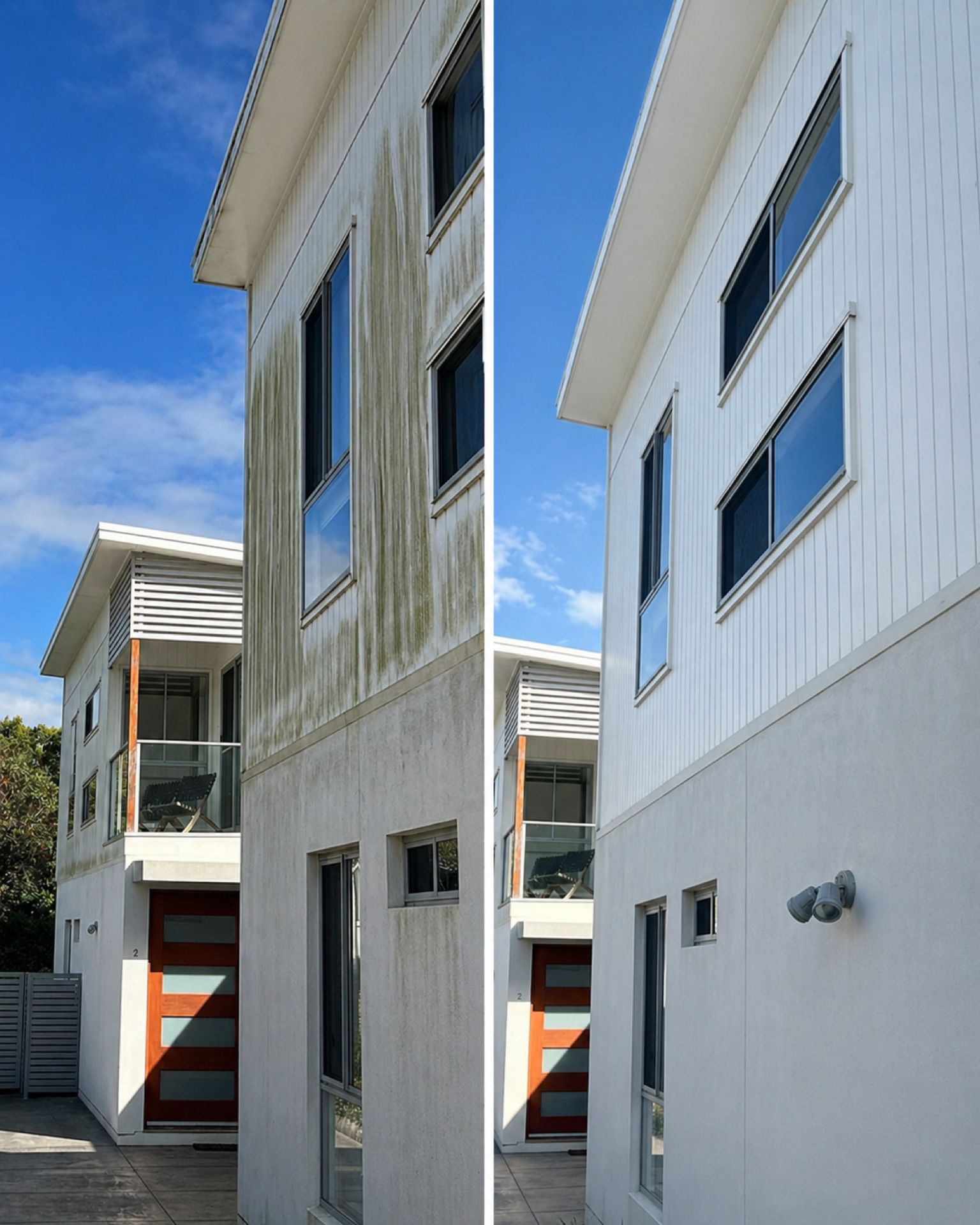
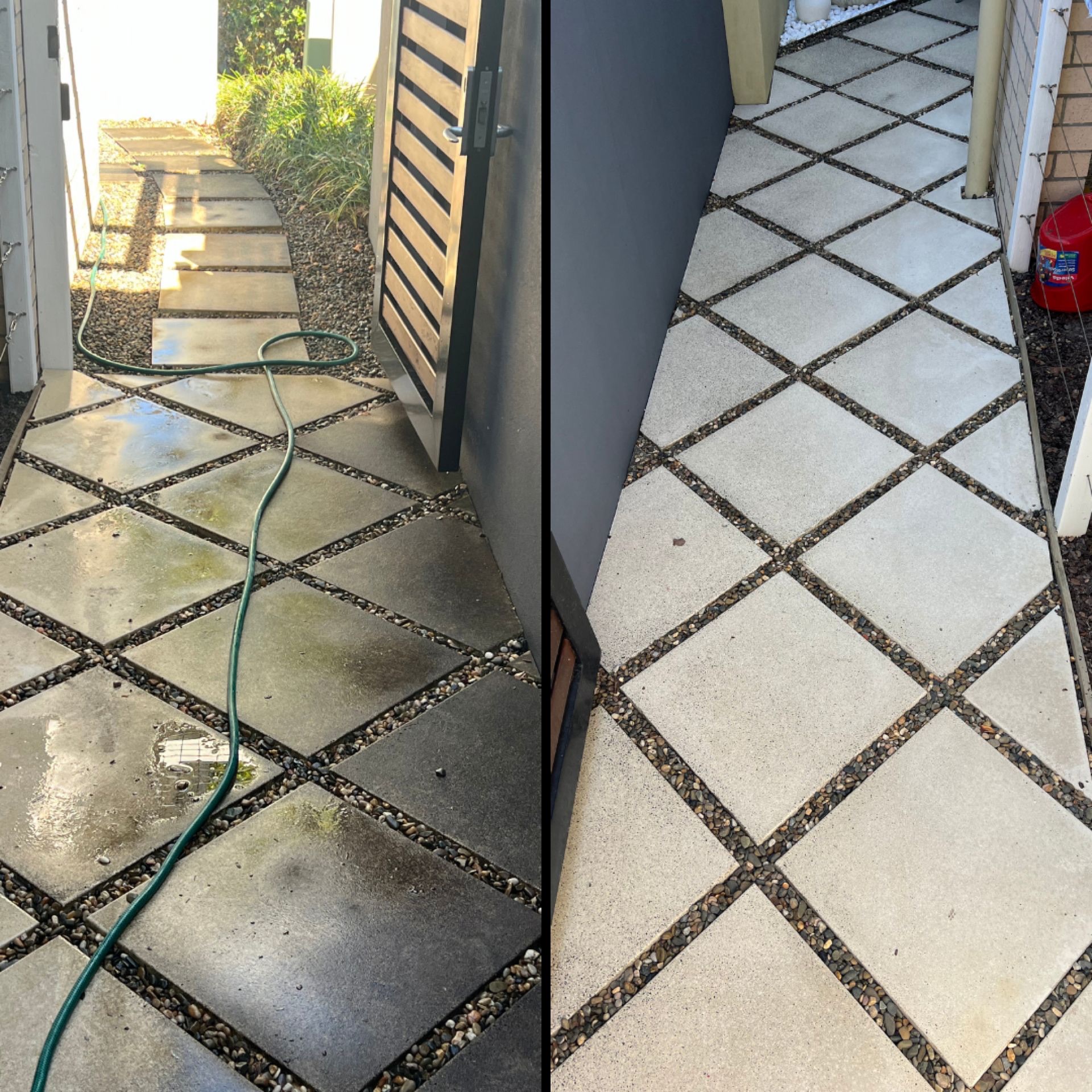
Oil Stain Treatment Services in South East Queensland
What Is Oil Stain Treatment?
Oil and fuel staining on concrete, pavers, and garage floors is one of the most stubborn surface problems in residential and commercial property care — and it's the one type of staining where we have to be completely upfront with you. Oil and fuel are absorbed deep into the porous structure of concrete the moment they hit the surface. They don't sit on top of the concrete like dirt does — they soak into the concrete itself. By the time you notice the stain and call us, the oil has often penetrated millimetres or even centimetres into the substrate.
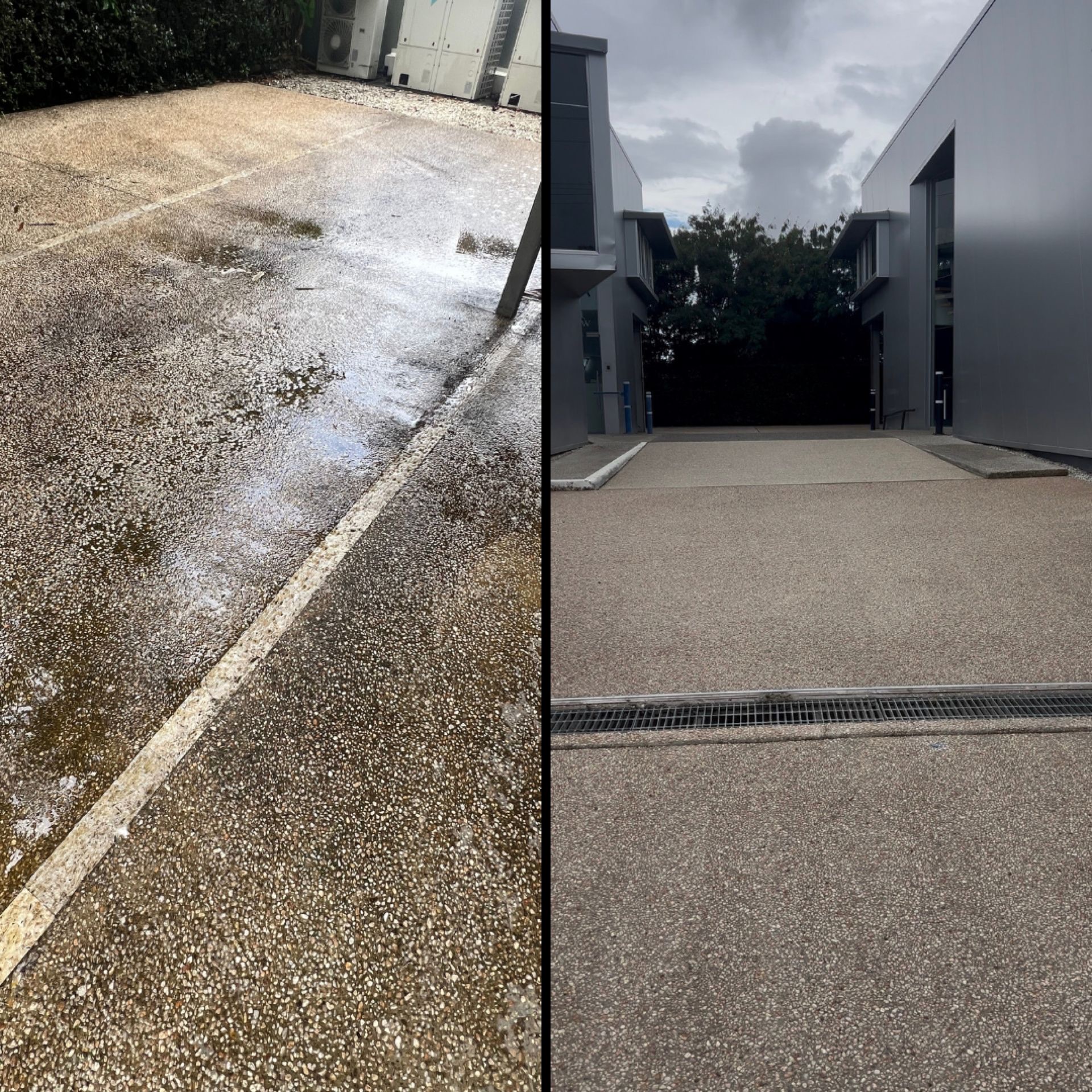
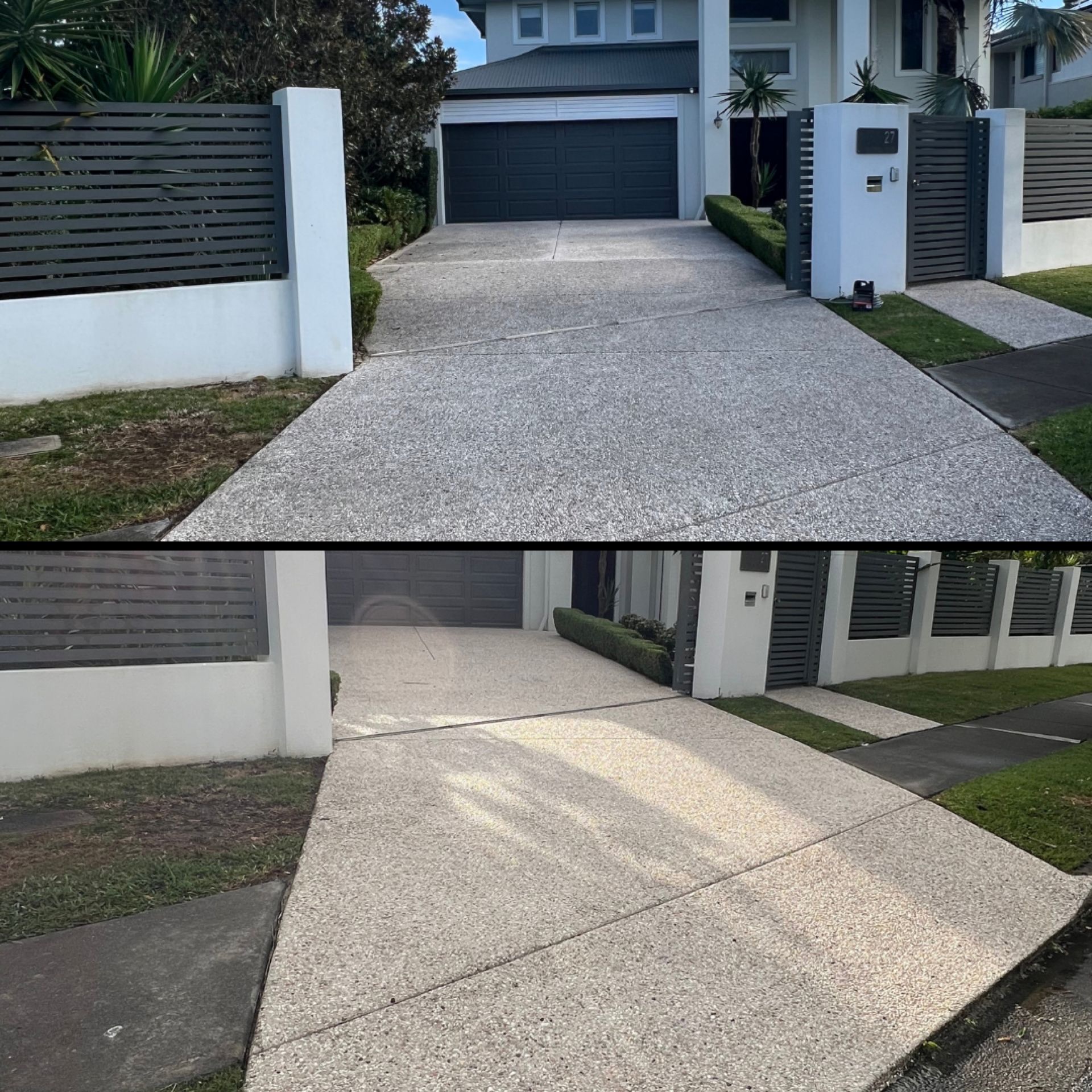
That's why oil staining is fundamentally a treatment, not a removal. We use industrial-grade alkaline degreasers matched to the specific surface and stain type, applied at the manufacturer-specified dilution, agitated into the surface, given proper dwell time, then pressure washed away with a commercial surface cleaner — and the cycle is repeated 2–3 times for best result. This process is the most effective oil treatment available, and it usually produces a noticeable lightening. But it cannot guarantee a result, and on some stains it has minimal visible effect. We tell you upfront so there are no surprises.
Our Oil Stain Treatment Process
- Stain Assessment
We assess the type of oil or fuel, the age of the staining, the surface material, and the depth of penetration. From this, we set realistic expectations with you and determine which industrial degreaser and dilution rate is best matched to your specific situation. You'll know what to expect before we start.
- Surface-Matched Degreaser Application
Our industrial-grade alkaline degreaser — selected and diluted according to the manufacturer's specifications for your surface type — is applied generously across the stained area. Different surfaces require different products and concentrations: sealed concrete, raw concrete, exposed aggregate, pavers, and tile each respond best to specific chemistry.
- Mechanical Agitation
The degreaser is worked into the surface with a stiff-bristle brush. Mechanical agitation is essential — it forces the degreaser into the pores of the surface where the oil sits, rather than letting it rest on top. This is the step DIY oil stain attempts almost always skip, which is why DIY rarely produces a meaningful result.
- Dwell Time and Surface-Cleaner Pressure Wash
The degreaser is given proper dwell time to chemically emulsify the oil, then pressure washed away using a commercial-grade surface cleaner attachment. The surface cleaner produces an even rinse pattern at high flow, lifting the emulsified oil cleanly without striping or zebra-marking the concrete.
- Repeat Cycle (2–3 Times)
The full cycle — apply, agitate, dwell, pressure wash — is repeated 2 to 3 times. Each pass lifts a little more of the residual oil from the deeper layers of the surface. After the final pass, we assess the result with you and discuss next steps if further options are needed.
- Final Inspection and Options Discussion
We assess the final result honestly. If the treatment has produced a satisfactory lightening, we recommend sealing the surface to protect against future staining. If significant staining remains, we'll talk you through masking options including tinted decorative concrete sealers that blend the stain into a uniform colour.
Honest Expectations: What Oil Stain Treatment Can and Can't Achieve
We need to be straight with you before any work starts: oil staining cannot be fully removed in most cases — and sometimes our treatment will have minimal visible effect. We don't know until we try. The result depends on how long the stain has been there (fresh stains respond far better than old ones), the type of oil, the surface material, the depth of penetration, and whether the surface has been treated before. If our methods don't lighten the staining, no other method will either — we use the best chemistry and equipment available for this job.
When Treatment Isn't Enough: Masking Options That Work
For oil staining that doesn't fully lift after professional treatment, the most effective and most popular solution is a tinted decorative concrete sealer. Rather than continuing to fight a stain that has chemically bonded with the substrate, we change the colour of the surface itself so the staining blends in. A dark-tinted decorative sealer (typically charcoal, slate, or deep grey) applied across the entire concrete area produces a uniform, professional finish where the residual oil staining becomes virtually invisible. This is the same technique used commercially on heavily-trafficked workshop floors, garage forecourts, and parking areas — it converts a problem driveway into a feature surface.
- Protects against future oil and fluid penetration (future stains sit on top of the sealer rather than soaking in)
- Makes future cleaning dramatically easier
- Provides a polished, premium appearance that lifts the look of the entire property
- Lasts 3–5+ years before needing reapplication
Most customers with stubborn oil staining choose this option.
Learn About Decorative Concrete Sealing →What's Included
- Industrial-grade alkaline degreaser application
- Surface-matched chemistry and dilution rates
- Mechanical agitation with stiff-bristle brush
- Multiple treatment cycles (typically 2–3 passes)
- Commercial pressure washer with surface cleaner attachment
- Honest pre-treatment expectation setting
- Post-treatment options discussion (sealing, masking, prevention)
- Treatment of concrete, pavers, exposed aggregate, and garage floors
- 30-day workmanship guarantee on application quality
Pricing
Oil stain treatment starts from $250+ for small spot treatments. Larger driveways, garage floors, and commercial areas are priced based on surface size, stain severity, and number of treatment cycles required. Final pricing is confirmed during a free on-site assessment, where we'll also give you an honest expectation of what's achievable. Free quotes available across South East Queensland.
Get a Free QuoteService Areas
We provide oil stain treatment services to homes and businesses across South East Queensland's major regions:
- Brisbane
- Gold Coast
- Ipswich
- Logan
- Redlands
- Moreton Bay